
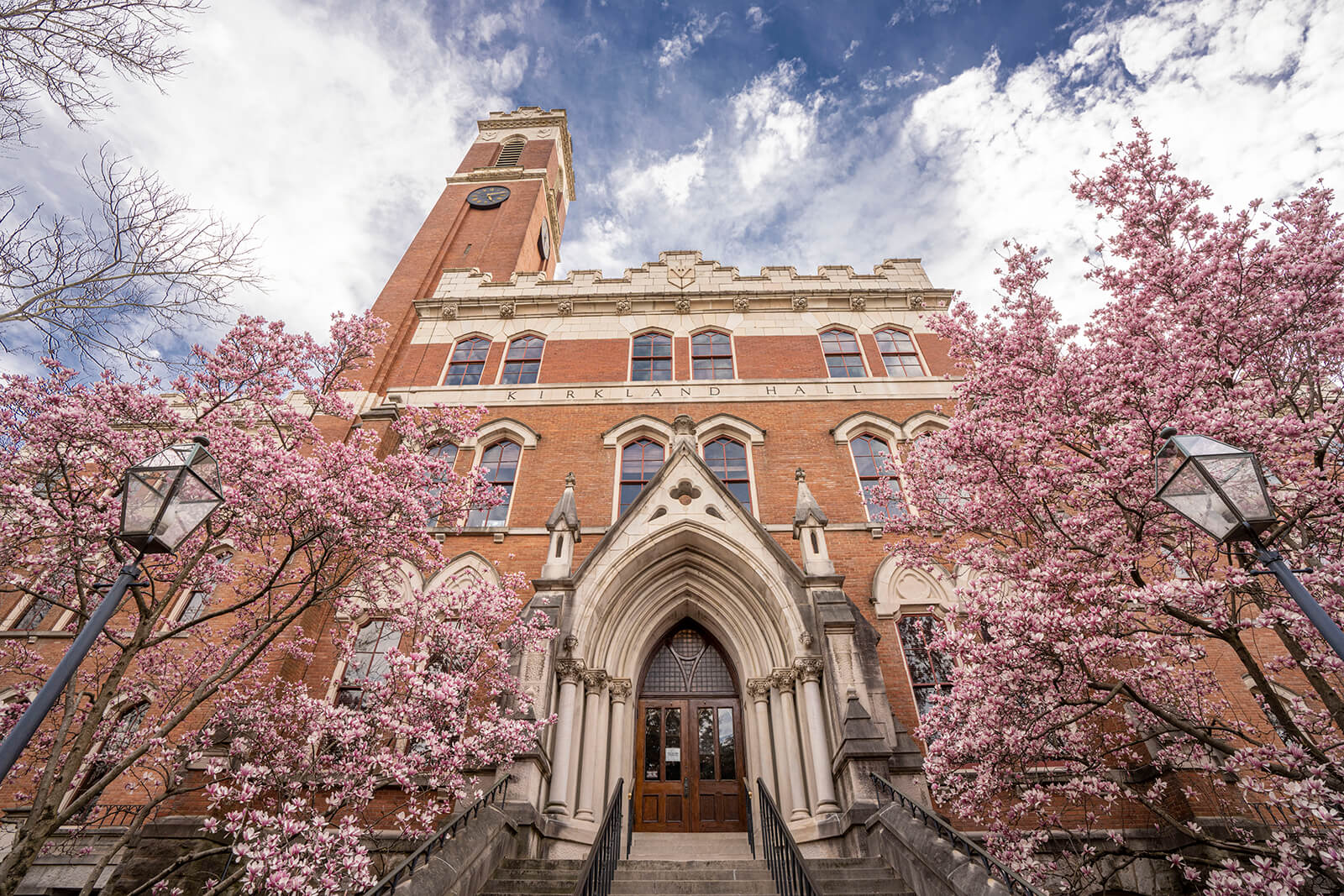
I saw the fat Vanderbilt envelope, ripped it apart, and glimpsed at the word “congratulations”. Screaming ecstatically and waving the torn envelope up and down as if I had wings, I blazed to my dorm.
That time, I attended Lynn Conservatory of Music (Florida), not long after the Great Recession nearly shattered my college dreams. It was also months after I succumbed to clinical depression triggered by a traumatizing breakup. My circumstances forced me to apply as a transfer student to colleges far from my ex-girlfriend’s school, Carnegie Mellon. And I had two virtually sleepless weeks to do that.
But the moment I received the Vanderbilt acceptance letter marked a turning point not only in my personal life but also in my understanding of the complex and emotional landscape of college admissions. You see, Vanderbilt stands out as one of the eight elite colleges I applied to as a transfer student. In the next few months, UPenn, Duke, Dartmouth, Johns Hopkins, Tufts, UVA, and Boston College rejected me.
These results enlightened me on various aspects of the transfer student’s journey. I had to reflect on what I did right as well as where I blundered. (In hindsight, sending a doctored photo of myself as a crossdresser holding an improbably large rabbit wasn’t the most professional decision.) By reflecting on the emotional rollercoaster of my transfer experiences, I hope to provide you with exclusive practical advice. Also, feel free to skip around by clicking the Table of Contents!
Organize your dates and deadlines
I learned my lesson the hard way. In senior year of high school, while scheduling piano performance auditions for USC and Eastman, I thought, “There’s no need to check the schedule. It would be too much of a coincidence if the auditions fall on the same day”. Lo and behold, they fell on the same day–which I did not realize until the day before the audition. Since I was in California already, I headed to USC and sent an apology email to Eastman, which is in Rochester, New York. Obviously, Eastman rejected me.
- Lesson learned: Organize the dates and deadlines. Double- or triple-check your schedule, neatly writing down every application deadline where you could easily see the dates every day.
Start preparing as soon as possible
On a related note, preparing for applications as soon as possible is arguably even more important for transfer students. Generally, the transfer acceptance rates of highly ranked colleges are often considerably lower than freshman acceptance rates. Sure, there are a few exceptions (Vanderbilt, Notre Dame, and USC immediately come to mind), but for the most part, your chances of acceptance to, say, Dartmouth are at best slim and at worst negligible. Consider the following data I gleaned from the Common Data Set (CDS).
Dartmouth historic acceptance rates
| Year | Dartmouth freshman acceptance | Dartmouth transfer acceptance | Percentage Difference |
| 2008 | 15.3% | 8.2% | -7.1 |
| 2009 | 13.5% | 6.9% | -6.6 |
| 2010 | 12.6% | 5.9% | -6.7 |
| 2011 | 11.7% | 3.7% | -8 |
| 2012 | 10.1% | 3.3% | -6.8 |
| 2013 | 9.8% | 3.8% | -6 |
| 2014 | 10.4% | 8.3% | -2.1 |
| 2015 | 11.5% | 2.8% | -8.7 |
| 2016 | 11% | 3.9% | -7.1 |
| 2017 | 10.6% | 4.7% | -5.9 |
| 2018 | 10.4% | 0.05% | -10.35 |
| 2019 | 8.7% | 1.5% | -7.2 |
| 2020 | 7.9% | 4.1% | -3.8 |
| 2021 | 9.2% | 28.6% | +19.4 |
| 2022 | 6.2% | 9.9% | +3.7 |
| 2023 | 6.4% | 7.3% | +0.9 |
This chart shows how transfer applicants generally had much lower chances of being accepted by Dartmouth. This is especially true considering the mindboggling 0.05% probability of acceptance for transfer applicants in 2018. The striking anomaly lies in the year 2021, when Dartmouth had a considerably higher transfer acceptance rate of 28.6% relative to the freshman acceptance rate of 9.2%. (I speculate that this spike in transfer acceptances may have had to do with COVID.) This might explain why transfer acceptance rates began to taper off in 2022.
For me, I slacked off in my senior year, hanging with my girlfriend (who later sent me to depression). Plus, she gave me a cold sore leading to a high fever and gums so swollen I could not eat. And that was days before my freshman application deadlines.
But I must thank her for my dreams of attending Carnegie Mellon with her. They propelled me to write my Common Application transfer essay even before the summer was over.
- Lesson learned: Begin working on your applications as soon as possible, especially the Common Application essay. Its prompts pretty much remain the same from year to year. (Oh, and if it is your first time getting a cold sore, get a prescription for acyclovir and amoxicillin.)

Prioritize in accordance with each school’s required essays
Depending on how early you begin preparing, it might make more sense to prioritize in accordance with each school’s essays.
Too many essays?
Personally, any school that required a large number of essays infuriated me, prompting me to provisionally cross them off. (I’m looking at you, Amherst.) Besides temporarily eliminating these schools, it helps if you begin by strategically grouping schools based on their essay prompts. Specifically, different schools might have very similar prompts. This year, for example, Yale requires its applicants to answer, in one sentence, the question, “If you could teach any college course, write a book, or create an original piece of art of any kind, what would it be?” And USC’s equally short prompt asks, “If you could teach a class on any topic, what would it be?”
Similarly, Brown asks its applicants to answer, in a hundred words, the prompt, “If you could teach a class on any one thing, whether academic or otherwise, what would it be?” and Northwestern has an optional essay request that goes, “If you could dream up an undergraduate class, research project, or creative effort (a start-up, a design prototype, a performance, etc.), what would it be? Who might be some ideal classmates or collaborators?” With four schools asking very similar questions, it would be reasonable to prioritize this essay.
Generic “Why School?” essays
There is one caveat, however. Unless you absolutely have no time, do not write a generic “Why School?” essay (which I did), thinking that you are clever by changing the school’s name and other content around (which I also did). Ideally, “Why School?” essays should be extraordinarily specific to each school. Show each school you did in-depth research and didn’t just Google stuff in the last five minutes. Mention specific courses, professors, student organizations, internships, and unique aspects of the campus and its environs. Try not to use a template.
- Lesson learned: While it is good to “work smart” and prioritize essays with similar prompts, do not make your “Why School?” essay generic or think that you could fool admissions officers by changing a few things up.

Get (and listen to) feedback from a wide variety of people and from AI
The Doctored Crossdresser Photo
Remember how I mentioned that my decision to send a doctored photo of myself as a crossdresser holding an improbably large rabbit was probably not so professional? (Some context is needed here: the image was an illustration for an accompanying satirical article that I penned for my high school newspaper, many issues of which I mailed to every school I applied to as a transfer student.) Well, for Tufts, which asked me something along the lines of “How would you describe yourself?”, I wrote that, beneath my tough exterior, I am a “cute and cuddly teddy bear.”
When my friend half-jokingly cautioned me, saying, “Raymond, Tufts is a 150-year-old institution that demands your respect,” I dismissed her advice as uptight and narrowminded. But even if I had been right about that, how could I be so sure that no admissions officer at Tufts was uptight and narrowminded?
Sending additional materials
Reflecting on my tomfoolery, I am now dubious about sending any extra materials at all, even if they had not contained anything controversial. After all, for every coveted school, a dozen or so admissions officers have to go through tens of thousands of applications per year, so it is reasonable to believe that even the most jaunty admissions officer might be annoyed upon seeing my extra pile of nonsense.
Today, with the rapid development of AI chatbots, there is no excuse for not getting and heeding feedback. For example, you can now ask ChatGPT to score a college application essay on a scale from 0 to 100 while giving invaluable suggestions. To be sure, ChatGPT may be somewhat fickle, but it does give you a general idea of how you can improve your essays.
- Lesson learned: Get feedback from people and AI and listen to them, even though you may find their suggestions unreasonable. Also, do not send additional materials to admissions unless they are absolutely necessary.
Prioritize in accordance with transfer acceptance rates (see graphs!)
I did not know until months after my transfer results that CDS lends invaluable insights into our chances at each school. Had I known, I would have spent the time to get a rough idea of the comparative difficulty of being admitted as a transfer student and to first begin working on applications for schools with the highest transfer acceptance rates. (Granted, the opposite strategy seems reasonable provided that you have enough time–work on the schools with the lowest transfer acceptance rates first so that you have more time to perfect those applications.)
Exceptions to the rule
As I mentioned earlier, transfer acceptance rates for most top schools are depressingly low, but there are a few exceptions. Lucky for you, I am constantly working on gleaning data from CDS to graph. Here, for example, is an interactive graph comparing the freshman and transfer acceptance rates of my alma mater, Vanderbilt, from 2013 to 2023.
And here is another interactive graph depicting the percentage difference between freshman and transfer acceptance rates for three schools: Dartmouth, the University of Notre Dame, and Vanderbilt. Numbers closer to zero mean that, for a given school, there is less of a difference between freshman and transfer acceptance rates. Positive numbers indicate that transfer acceptance rates are higher than those for freshmen. Negative numbers indicate the opposite.
The rule of thumb
Still unconvinced about the importance of prioritizing schools this way? The following numbers gleaned from Princeton’s CDS might change your mind.
| Year | Princeton freshman | Princeton transfer | Percentage difference |
| 2018 | 6.4 | 0 | N/A |
| 2019 | 5.5 | 0.1 | -5.4 |
| 2020 | 5.8 | 1.4 | -4.4 |
| 2021 | 5.6 | 1.7 | -3.9 |
| 2022 | 4.4 | 1.3 | -3.1 |
| 2023 | 5.7 | 2.9 | -2.8 |
The reason Princeton’s transfer acceptance rate was 0 for the 2017-2018 round was that the school, which accepted transfer students before 1990, did not reopen transfer admissions until 2018-2019. Even with gradually rising transfer acceptance rates in the past few years, those numbers remain much lower than the single-digit freshman acceptance rates. Just for fun, let us add UPenn into the data and observe the percentage differences.
Your UPenn hopes are certainly not as preposterous as your Princeton dreams, but given the negative numbers and UPenn’s single-digit freshman chances, the odds are still stacked against you.
- Lesson learned: Whether you start with applications to the most selective schools or go the opposite direction, ensure that you understand your chances at each school before prioritizing. (Sidenote: More tables and graphs like the ones above will be available at milestoneadmissions.com in the foreseeable future!)
GPA and Coursework
GPA
This may seem like a no-brainer, but it bears emphasizing the importance of aiming for a perfect overall GPA in order to minimize reservations college admissions officers may have about your ability to succeed academically at their school. In my case, I could have had a perfect GPA if it were not for the fact that one particularly monotonous history professor brought my grade down to an A minus with one pop quiz.
Likewise, the relevance and rigor of your coursework are crucial. I suspect that one reason I was rejected by every school except Vanderbilt was that, as a music major applying to be a psychology major, I had neither access to college psychology courses or any AP Psychology score. It did not help that my first college had no particularly rigorous courses.
That said, I did get accepted into Vanderbilt still, which suggests that not all schools place that much emphasis on the relevance and rigor of coursework, at least not for transfer applicants.
- Lesson learned: Work arduously for a perfect GPA while taking rigorous courses that are relevant to your intended major, especially if you are changing your major.
Are they really need-blind?
On April 1, 2010, I received the following email from a Vanderbilt admissions officer:
Meng-Ju,
Non-U.S. citizens and permanent residents are not eligible for need-based financial aid as transfer students. Therefore, we are highly unlikely to offer admission to an international transfer applicant who are [sic] not able to pay the full cost of attendance.
This email got me thinking: Why is an admissions officer telling me about my chances of admission? Perhaps I do stand a chance after all? I soon learned that, despite top colleges touting their need-blind policies, such policies almost always do not apply to international students (for more information about this, read the “Scholarship and Financial Aid Assistance” section on my Services page).
For some reason, this fact is somewhat obscure. Indeed, even admissions officers themselves get it wrong. When I emailed to all the schools I applied to, asking to be removed from consideration for financial aid, a UPenn admissions officer replied, underscoring their need-blind policy–which, to my knowledge, remains inapplicable to international students as of today, November 17, 2023.
- Lesson learned: If you are an international student, you are generally not eligible for financial aid. With few exceptions, the need-blind policies touted by many top universities do not apply to international students.

Conclusion: navigating the journey ahead
As we reach the end of this guide, I hope my journey and the lessons I’ve shared illuminate the path for your own transfer application process. Remember, transferring to a top school is not just about beating the odds; it’s about understanding them, preparing meticulously, and presenting your truest self.
Reflecting on my own experiences—from the elation of receiving that Vanderbilt acceptance letter to the challenges and missteps along the way—I’ve learned that each setback is an opportunity to grow and each success, a chance to reflect on what truly matters.
As you embark on this journey, know that you’re not alone. Milestone Admissions is here to support you every step of the way. We encourage you to reach out, share your stories, and engage with a community that understands your aspirations and challenges.
Lastly, remember that your path to a top school, much like mine, will be unique. Embrace it with confidence, armed with the knowledge and insights you’ve gained here. We’re excited to see where your journey takes you and how your story unfolds.
Your next step begins today. Are you ready to take it?


Leave a Reply